Welcome to meidicross the leading medical facility for the health of you and your family.

Last updated: May 2,2026
Your heart doesn’t just work when you’re resting—it works even harder when you’re walking, climbing stairs, or dealing with daily stress. Sometimes, underlying heart issues only show up when your heart is under strain. That’s exactly what a Treadmill Test (TMT) is designed to evaluate.
At Good Heart Clinic, Dr. Harshal Ingle uses treadmill testing as a reliable and non-invasive way to understand how your heart performs during physical activity—helping detect problems early, often before they become serious.
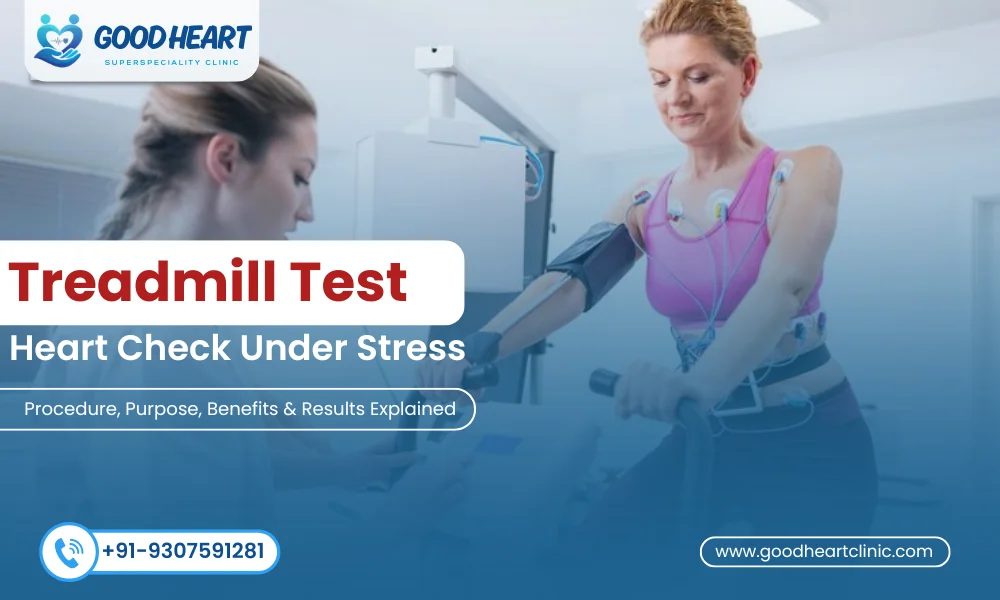
A Treadmill Test, commonly referred to as TMT or cardiac stress test, measures how your heart responds to increased physical activity. While you walk on a treadmill, your heart rate, blood pressure, and electrical activity (ECG) are continuously monitored.
A resting ECG can sometimes appear normal even when there is an underlying issue. A TMT helps uncover these hidden concerns by putting your heart under controlled stress.
Many heart conditions, especially coronary artery disease, may not show symptoms until the heart is working harder. A treadmill test helps bridge that gap.
Dr. Harshal Ingle may recommend a TMT to:
For many patients, this test becomes an essential part of preventive cardiology—catching warning signs early.
Not everyone needs a TMT, but it is highly recommended in certain situations.
You may benefit from a treadmill test if you:
At Good Heart Clinic, every recommendation is personalized. Dr. Harshal Ingle ensures the test is appropriate and safe for your specific condition.
Dr. Harshal Ingle at Good Heart Clinic approaches cardiac care the way it should be approached, with proper time, clear communication, and a focus on what’s actually going on with you as a person, not just what your numbers say.
One of the reasons TMT is widely used is because it is simple, quick, and non-invasive. The entire process usually takes around 20 to 30 minutes.
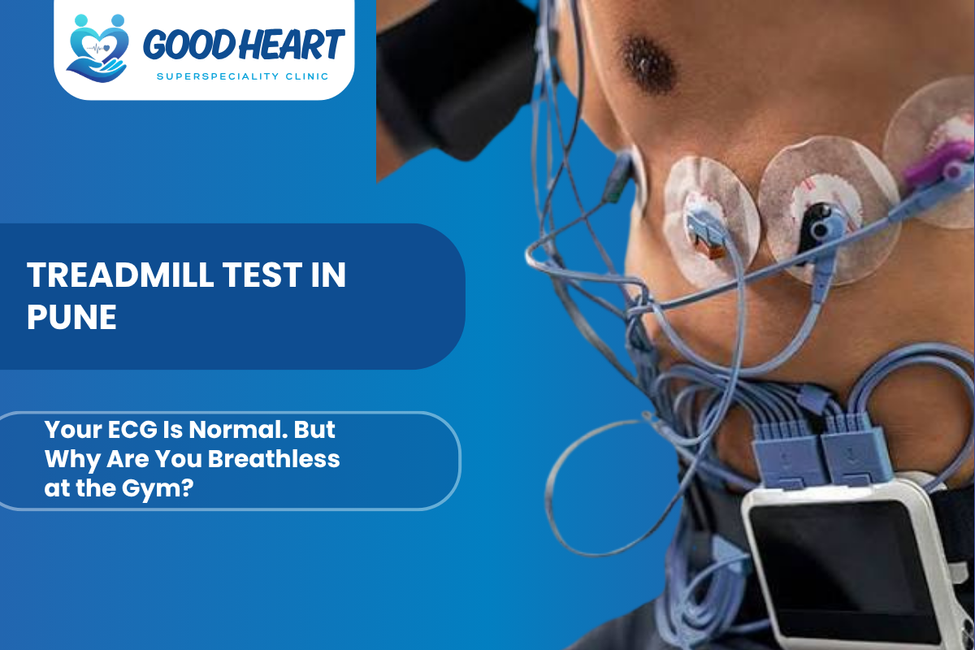
Small electrodes are attached to your chest to record your heart’s electrical activity. A baseline ECG and blood pressure reading are taken while you’re at rest.
You begin walking slowly on the treadmill. At this stage, the goal is to gently prepare your body for increasing activity.
Every few minutes, the treadmill’s speed and incline increase. This gradually raises your heart rate in a controlled and safe manner.
Throughout the test, your:
are closely observed by the medical team.
The test continues until you reach your target heart rate or if symptoms like fatigue or discomfort appear.
Once the treadmill stops, your heart is monitored as it returns to its normal resting state. This phase is equally important for accurate interpretation.
In many cases, patients come in with vague symptoms—slight chest discomfort, unusual tiredness, or breathlessness. These symptoms don’t always show clear results in resting tests.
A TMT helps bridge that gap.
Dr. Harshal Ingle may suggest this test to:
It’s often used as a preventive tool, especially for people with risk factors.
At Good Heart Clinic, you’re not just getting a test—you’re getting a comprehensive evaluation of your heart health.
Under the care of Dr. Harshal Ingle, you benefit from:
Patients are guided at every step, ensuring clarity, comfort, and confidence in their care.
No, a treadmill test is not painful. It simply involves walking on a treadmill while your heart activity is monitored. You may feel tired as the speed increases, but that’s expected.
The actual walking part usually lasts 10–15 minutes, but with preparation and recovery, the entire process takes around 20–30 minutes.
It’s best to avoid heavy meals at least 2–3 hours before the test. A light snack is usually fine unless your doctor advises otherwise.
Wear comfortable clothes and walking shoes, similar to what you would wear for light exercise.
It is generally safe, but may not be recommended for people with certain conditions like severe heart disease or uncontrolled blood pressure. Your doctor will assess this beforehand.
An abnormal result does not always mean a serious problem. It simply indicates that further evaluation may be needed, such as an echo test or cardiac CT scan.
A TMT can suggest the presence of blockages by showing reduced blood flow during exercise, but it does not directly visualize arteries. Additional tests may be required for confirmation.
Do not stop any medication on your own. Always follow your doctor’s instructions, as some medicines may need adjustment before the test.
People with recent heart attack, severe chest pain at rest, serious arrhythmias, or advanced heart conditions may not be suitable for this test.
It depends on your age, symptoms, and risk factors. For preventive care, your doctor may suggest it periodically, especially if you have conditions like diabetes or hypertension.

If you are searching for ECG test cost in Pune or need heart evaluation, consult an expert before booking.
Visit Dr Harshal Ingle at Good Heart Clinic for transparent cardiac care.
Book your appointment today for timely and trusted heart assessment.
We believe that every patient deserves absolute confidence in their care plan.
303, A, Choice Apartments Opp Vohuman Cafe , Dhole Patil Road , Pune
Support mail: drharshalingle@gmail.com
Opening Hours: Mon -Sat: 04.00 PM to 08.00 PM