Welcome to meidicross the leading medical facility for the health of you and your family.
Welcome to meidicross the leading medical facility for the health of you and your family.


Last updated: May 24,2026
Pacemaker implantation in Pune is one of the most impactful cardiac procedures available today — and for many patients, it is the difference between a life limited by fatigue, fainting, and fear, and a life lived fully. Yet most people who need this procedure know surprisingly little about it. They know the word “pacemaker.” They do not know what type they need, what the procedure involves, how much it will cost, or what makes one cardiac centre different from another.
That changes today.
At Good Heart Clinic, we believe every patient deserves complete clarity before any procedure. This guide covers everything you need to know about pacemaker implantation in Pune — from the moment you are first told you might need one, right through to long-term follow-up and life with a device.
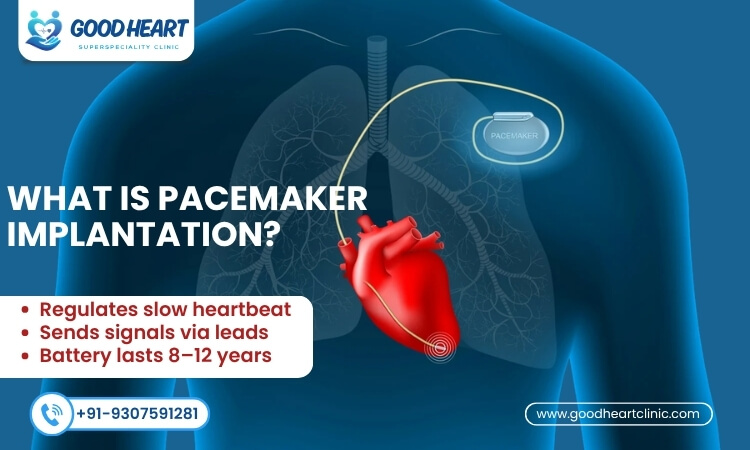
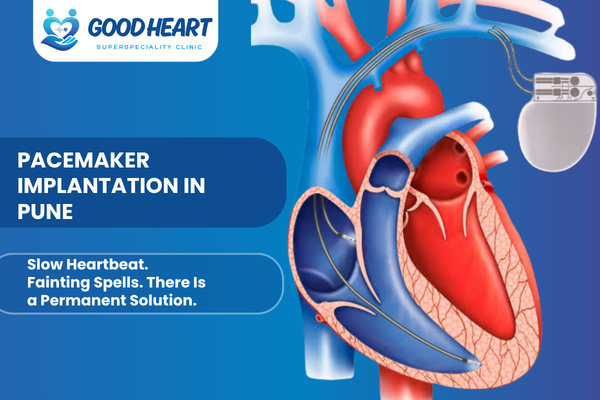
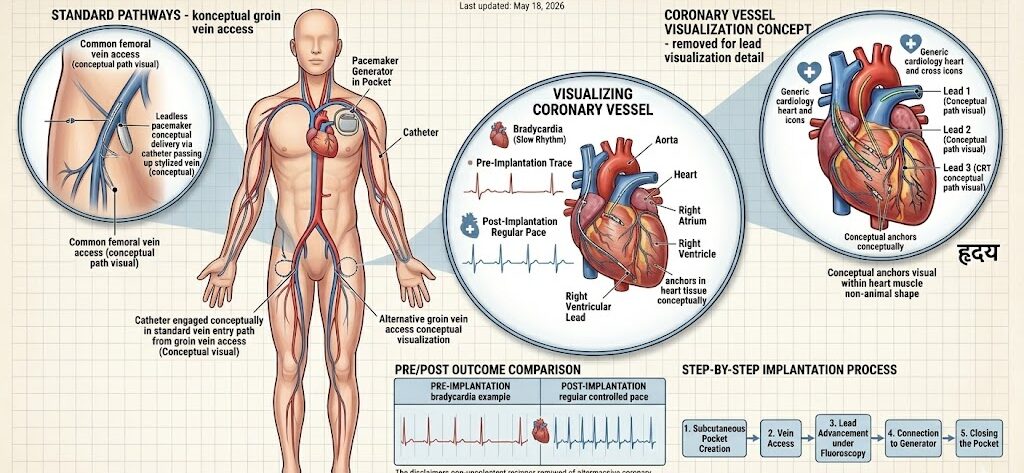
A pacemaker is a small, battery-powered electronic device implanted under the skin — typically just below the collarbone — to regulate the heart’s electrical rhythm. It connects to the heart through one or two thin wires called leads. These leads continuously monitor your heart rate and deliver gentle electrical pulses whenever your heartbeat becomes too slow, too irregular, or pauses unexpectedly.
The heart has its own natural electrical system that triggers each heartbeat. When this system weakens or is disrupted — due to ageing, disease, medication side effects, or prior heart procedures — the heart can beat dangerously slowly (bradycardia) or develop irregular pauses. This leaves the body starved of oxygen-rich blood, causing symptoms that range from mild fatigue to sudden blackouts.
Pacemaker implantation in Pune corrects this by providing a reliable backup electrical signal. It does not replace the heart’s own rhythm — it supports it, stepping in only when needed.
Pacemakers are recommended for patients experiencing:
If you have been experiencing unexplained dizziness, blackouts, extreme tiredness, or breathlessness without an obvious cause, your cardiologist may recommend a Holter monitor or electrophysiology study to determine whether a pacemaker is needed.
Also read: Heart Attack & Heart Blockage Symptoms | When to See a Cardiologist? — recognising warning signs early saves lives.
Not every patient requires the same device. At Good Heart Clinic, the pacemaker type is selected based on your specific heart condition, age, activity level, and long-term needs.
One lead placed in either the right atrium or right ventricle. Used for simpler rhythm disturbances such as isolated bradycardia.
Two leads — one in the right atrium, one in the right ventricle — allowing the device to coordinate the timing between chambers. This is the most commonly implanted type and closely mimics the heart’s natural rhythm.
Three leads coordinate the right atrium and both ventricles. Recommended for patients with heart failure who have a wide QRS pattern on ECG. CRT improves the heart’s pumping efficiency and significantly reduces heart failure symptoms.
A newer, catheter-delivered device implanted directly inside the heart with no leads and no chest pocket. Ideal for patients with high infection risk or those unable to tolerate traditional implantation. Available at select advanced cardiac centres.
Understanding the procedure reduces anxiety and helps patients prepare appropriately.
Step 1 — Pre-Procedure Evaluation Your cardiologist will review your symptoms, ECG findings, Holter monitor results, and echocardiogram before recommending implantation. Blood tests, chest X-ray, and an anaesthesia assessment are also completed.
Step 2 — Preparation on the Day You will be asked to fast for 6 hours before the procedure. Medications including blood thinners may be temporarily adjusted. The procedure is performed under local anaesthesia with mild sedation — most patients remain awake and comfortable throughout.
Step 3 — Creating the Pocket A small incision is made just below the collarbone on the left side (usually). A small pocket is created under the skin to hold the pacemaker device.
Step 4 — Lead Placement Thin, flexible leads are guided through a vein — typically the subclavian vein — into the correct chamber of the heart under live X-ray guidance (fluoroscopy). The leads are anchored in position and tested to confirm accurate sensing and pacing.
Step 5 — Device Connection and Testing The leads are connected to the pacemaker generator. The device is programmed and tested to confirm it is sensing and responding correctly to the heart’s own activity.
Step 6 — Closure and Recovery The incision is closed with sutures and covered with a sterile dressing. You are moved to a recovery area where heart rhythm, blood pressure, and the wound site are monitored for 24 hours before discharge.
Step 7 — Follow-Up and Device Programming Pacemakers are programmable devices. Your cardiologist will adjust the settings at follow-up visits to optimise them for your heart condition and activity level. Remote monitoring technology now allows some devices to transmit data to your care team between appointments.
One of the first questions families ask is: “What will pacemaker implantation cost in Pune?“ Here is an honest, structured answer.
| Cost Component | What It Covers |
|---|---|
| Device Cost | The single biggest variable — type, brand, and features of the pacemaker |
| Procedure / Cath Lab Fee | Use of the specialised cardiac procedure room and imaging equipment |
| Cardiologist’s Professional Fee | The implanting cardiologist’s expertise and time |
| Hospital Stay | Typically 24–48 hours post-implantation |
| ICU / Monitoring Charges | Post-procedure observation and nursing |
| Medications | Antibiotics, pain relief, and other drugs during admission |
| Lead Cost | Each lead (wire) is billed separately in some facilities |
| Follow-Up Programming | First device check and settings adjustment post-discharge |
Most Indian health insurance policies cover pacemaker implantation, but coverage details vary significantly. Before your procedure, verify:
Our team at Good Heart Clinic assists patients with insurance pre-authorisation paperwork to ensure there are no billing surprises after discharge.
Pacemaker implantation is available at multiple hospitals across Pune. The question is not just where you go — it is who performs the procedure and how they approach your care before, during, and after.
Dr. Harshal Ingle brings specialised expertise in cardiac rhythm management, including pacemaker implantation, cardiac resynchronisation therapy, and complex arrhythmia management. His approach is built on three pillars: precise diagnosis, evidence-based device selection, and long-term patient education. He does not recommend a pacemaker unless the clinical evidence clearly supports it — and when he does, he takes the time to explain exactly why, what type is being used, and what to expect at every stage.
Dr. Rahoul Nagdda provides comprehensive cardiac support and works closely with Dr. Ingle to ensure patients with complex, multi-system conditions receive coordinated, expert care throughout their treatment journey.
Also read: Pacemaker Cost in Pune | Device & Surgery Details by Dr. Harshal Ingle — a detailed cost guide for patients planning ahead.
Recovery from pacemaker implantation is typically straightforward. Most patients feel significantly better within the first week as their heart rhythm stabilises.
Week 1: Rest, avoid lifting the arm on the pacemaker side above shoulder height, keep the wound dry, and take prescribed medications.
Weeks 2–4: Gradually resume light activities. Your cardiologist will confirm when it is safe to drive, return to work, and resume exercise.
Long term: Attend all follow-up appointments for device checks. Carry your pacemaker ID card at all times. Inform other doctors, dentists, and hospital staff that you have a pacemaker before any medical procedure, scan, or surgery. Avoid prolonged proximity to strong magnetic or electrical sources.
Modern pacemakers are well-shielded against everyday electromagnetic interference — mobile phones, household appliances, and airport security are generally safe with standard precautions your cardiologist will explain.
It is a procedure where a small battery-powered device is placed under the skin to regulate a slow or irregular heartbeat using gentle electrical pulses delivered through leads placed inside the heart.
No. It is a minimally invasive procedure done under local anaesthesia. The device is placed through a small incision below the collarbone — no open-heart surgery required. Most patients go home within 24 hours.
Most modern pacemakers last 8 to 12 years depending on battery usage and device type. Regular follow-up visits monitor battery life and allow timely replacement planning.
Not usually. The device is small and lightweight. You may be briefly aware of it during initial healing, but this fades. Most patients forget it is there within a few weeks.
Yes. A pacemaker restores stable heart rhythm, dramatically improving energy, reducing blackouts, and enabling patients to resume normal daily activities including moderate exercise, travel, and work.
A dual-chamber pacemaker procedure in Pune typically ranges from ₹1,50,000 to ₹2,50,000 including device, procedure, and hospital stay. Biventricular devices cost more. Contact Good Heart Clinic for a personalised written estimate.
Yes, in most cases. Coverage depends on your policy, device type, and hospital network. Our team helps with pre-authorisation and insurance paperwork before the procedure.
A single-chamber pacemaker paces one heart chamber. A dual-chamber device coordinates both the upper and lower chambers, more closely mimicking the heart’s natural rhythm — making it better suited for most patients.
In the first 4–6 weeks: avoid raising the arm on the implanted side above shoulder height and limit strenuous activity. Long term: inform all medical providers about your pacemaker and carry your device ID card. Your cardiologist will give you a personalised checklist.
Common signs include recurrent dizziness, blackouts, extreme fatigue, or a confirmed slow heart rate on ECG or Holter monitoring. A specialist consultation is the only reliable way to determine whether a pacemaker is clinically indicated.
If you or a family member has been advised pacemaker implantation — or if you are experiencing symptoms that suggest a heart rhythm problem — do not wait. Early evaluation is always safer than delayed action.
Dr. Harshal Ingle and Dr. Rahoul Nagdda are available for consultation at:
For Appointment: +91-9822055445 / +91-8208950831 Emergency: +91-9697020666 / +91-7722031119
We believe that every patient deserves absolute confidence in their care plan.
303, A, Choice Apartments Opp Vohuman Cafe , Dhole Patil Road , Pune
Support mail: drharshalingle@gmail.com
Opening Hours: Mon -Sat: 04.00 PM to 08.00 PM