

Orbital and Rotational Atherectomy
Restoring Vessel Freedom with Advanced Technique
Orbital and Rotational Atherectomy
Overview
Rotational Atherectomy is an advanced cardiac procedure used to treat extremely hardened or calcified blockages in the coronary arteries. These blockages are difficult to treat using standard angioplasty because the plaque becomes as hard as stone, reducing the success rate of balloon expansion and stent placement. In such cases, Rotational Atherectomy becomes a safe and effective technique to modify the hardened plaque and prepare the artery for successful stenting.
At Good Heart Clinic, this procedure is performed using state-of-the-art devices and guided by highly skilled interventional cardiologists. The goal is to restore smooth blood flow and ensure the stent opens properly, preventing future heart complications. Rotational Atherectomy plays a crucial role in treating challenging lesions, especially in older patients, diabetics, and individuals with long-standing coronary artery disease.
Orbital and Rotational Atherectomy in Pune
If you are looking for advanced treatment for heavily calcified coronary blockages, Good Heart Clinic offers expert evaluation and guidance for orbital and rotational atherectomy in Pune.
These specialized procedures are used in complex angioplasty cases where hardened calcium deposits make standard balloon angioplasty or stent placement difficult.
What is a Rotational Atherectomy?
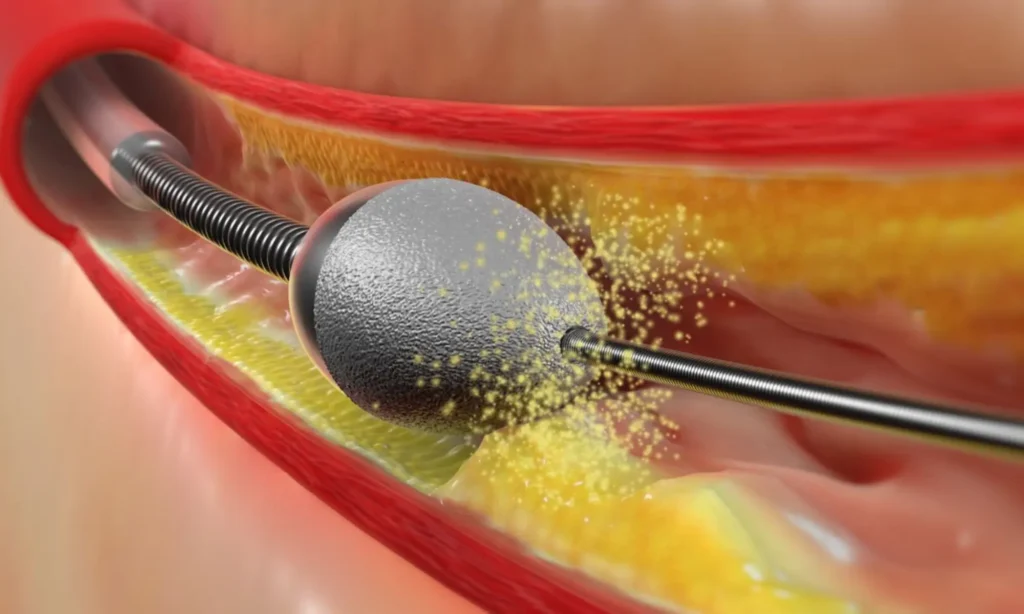
Rotational Atherectomy, often referred to as “Rota Ablation” or “Rota,” is a specialized procedure used to treat calcified coronary artery blockages that cannot be opened with regular angioplasty balloons. The technique involves the use of a high-speed rotating burr (diamond-coated tip) that spins at nearly 150,000–200,000 rotations per minute.
As it rotates, the burr gently breaks down the hardened plaque into microscopic particles that safely pass through the bloodstream. This modification helps in:
- Making the artery more flexible
- Preparing the vessel for balloon expansion
- Allowing the stent to expand fully
- Ensuring long-term results and reducing stent failure
Rotational Atherectomy is especially beneficial for patients with long segment blockages, heavily calcified arteries, and those who have previously undergone unsuccessful angioplasty.
Time Taken for the Procedure
The duration of a Rotational Atherectomy procedure varies based on the complexity of the blockage.
The procedure
Complete angioplasty with stenting may take 1 to 2 hours.
Recovery and observation
Post-procedure monitoring in the recovery area generally lasts 6 to 12 hours, depending on the insertion site and patient condition.
Total hospital time
Some patients may require overnight hospitalization, especially if multiple arteries were treated or if the case was high-risk.
Symptoms
Chest Discomfort
Patients with hard, calcified blockages often experience persistent chest discomfort that does not improve with medicines.
Coronary Artery Blockages Detected on Angiography
When diagnostic imaging shows hardened plaque preventing balloon expansion, doctors recommend rotational atherectomy.
Failed Angioplasty Attempts
If standard angioplasty or balloons are unable to cross or open the blockage, rotational atherectomy becomes necessary for plaque modification.
Recurrent Angina Despite Prior Treatment
Patients experiencing repeated chest pain even after angioplasty may have calcified, untreated segments needing atherectomy.
Blockages in Elderly or Diabetic Patients
Both groups commonly develop calcified lesions that require specialized treatment.
Multi-vessel Coronary Artery Disease
Complex blockages present in multiple arteries may require plaque modification to ensure successful stenting.
High Calcium Score
A high calcium score indicates hardened arteries, and rotational atherectomy helps manage such cases effectively.
Stress-Triggered Discomfort
If anxiety or emotional strain brings on chest or heart-related sensations.
Benefits
Effective Treatment for Hard, Calcified Blockages
Ensures Successful Stent Placement
Improves Blood Flow & Reduces Chest Pain
Increases Angioplasty Success in Complex Cases
Preparations
Preparing for Rotational Atherectomy is similar to preparation before angioplasty or complex coronary interventions. Cardiologist will guide you through each step to ensure the procedure is safe.
Before the Day of Your Procedure:
On the Day of Your Procedure:
What Does the Procedure Involve?
Rotational Atherectomy is performed inside a cath lab by an experienced interventional cardiologist. The steps typically include:
- You will lie on the procedure table while the wrist or groin area is cleaned and numbed with local anesthesia.
- A catheter is inserted and guided toward the coronary artery containing the hardened plaque.
- A special guidewire designed for rotational atherectomy is positioned across the calcified blockage.
- A diamond-coated burr is attached to the wire and activated to rotate at high speed.
- As the burr rotates, it gently grinds the hardened plaque into microscopic particles.
- The plaque is modified enough to allow a balloon and stent to expand smoothly.
- After plaque modification, your doctor performs balloon angioplasty followed by stent placement.
- The catheter is removed, and a closure device or bandage is applied.
Throughout the procedure, your heart rhythm, blood pressure, and oxygen levels are closely monitored. The process is painless and highly controlled.
What Follows the Procedure?
After Rotational Atherectomy, you will be moved to a recovery area for observation.
First 24-48 Hours at Home:
- Activity restrictions: Rest is essential for the first day or two. Avoid heavy lifting, pushing, or pulling anything over 5-10 pounds for one week. Don’t participate in strenuous exercise or sports. Light walking is encouraged and helpful for recovery. Take stairs slowly and rest as needed.
- Hydration: Drink 8-10 glasses of water daily for the first several days to help your kidneys eliminate contrast dye and microscopic particles from the atherectomy.
- Insertion site care: Keep the area clean and dry for the first 24 hours. You can shower after 24-48 hours, but avoid soaking in baths, hot tubs, or swimming for one week. Watch for signs of infection, bleeding, or complications.
- Driving: Wait at least 48 hours before driving, longer if you feel weak or are taking narcotic pain medication.
- Return to work: Most people return to work within 5-7 days for desk jobs, longer if your work involves physical labor. Discuss specific timing with your cardiologist.
Warning Signs Requiring Immediate Medical Attention:
- Severe or persistent chest pain: New or worsening chest discomfort, especially if similar to a heart attack, requires immediate emergency care. Call emergency services immediately.
- Insertion site problems: Significant bleeding that doesn’t stop with 15 minutes of firm pressure, rapidly growing lump or hematoma, severe pain at the insertion site, or warmth, redness, and drainage suggesting infection.
- Circulation problems: Numbness, tingling, coldness, or color changes in the arm or leg where the catheter was inserted could indicate arterial injury.
- Other concerning symptoms: Severe shortness of breath, irregular heartbeat or palpitations, fever over 100.4°F (38°C), unusual weakness or dizziness, nausea and vomiting, or decreased urine output.
Frequently Asked Question (FAQs)
Yes, Rotational Atherectomy is a safe and widely practiced procedure performed by experienced interventional cardiologists. It is done in a fully equipped cath lab where your heart rate, blood pressure, and rhythm are monitored continuously. Complications are rare, especially when performed by skilled cardiac specialists.
Regular angioplasty uses a balloon to widen soft or moderately hard blockages. However, when blockages are extremely calcified, the balloon cannot expand. Rotational Atherectomy uses a high-speed rotating burr to gently break down the hardened plaque, allowing successful balloon dilation and stent placement afterward.
No. The procedure is not painful. Local anesthesia is applied to the wrist or groin, and the patient remains awake but comfortable throughout the PCI procedure. You may feel slight pressure, but there is no sharp pain during rota ablation.
Minimal risks exist—such as temporary heart rhythm changes, mild vessel irritation, or minor groin/wrist swelling—but these are uncommon. The procedure is performed under continuous monitoring, and most issues, if they occur, are managed immediately.
The rotational atherectomy step usually takes 20–40 minutes, while the complete angioplasty with stenting may take 1–2 hours, depending on the severity and number of blockages.