Heart Attack Symptoms & Chest Pain Signs You Should Never Ignore | Expert Advice by Dr. Harshal Ingle

Blog-bg

Reviewed by Dr. Harshal Ingle

Last updated: February 10,2026

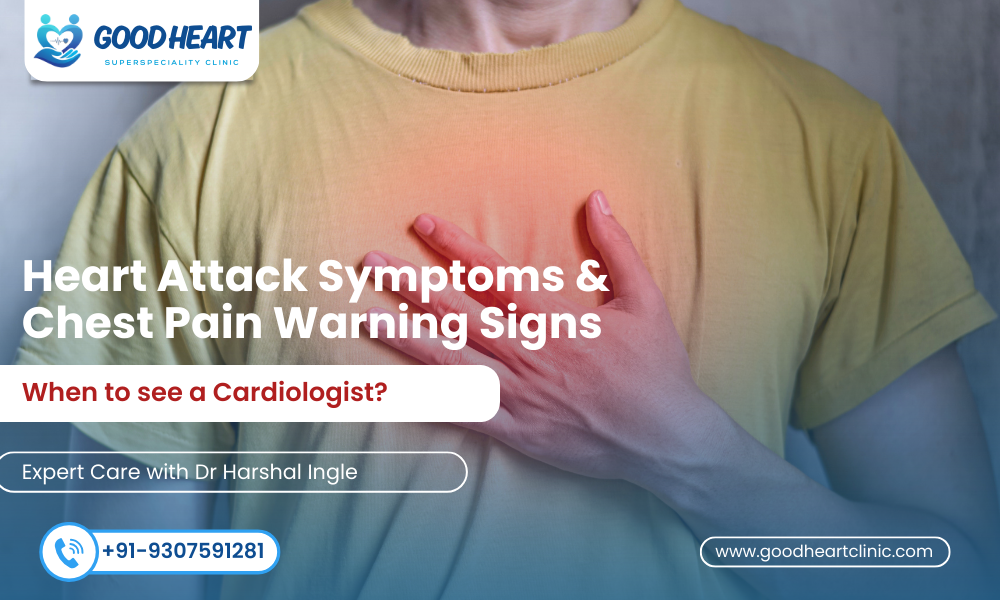
Many heart attacks don’t happen suddenly. Your body often gives warning signs days or weeks earlier  but most people ignore them.

Chest pain, heaviness, or breathlessness is often mistaken for gas, acidity, or muscle strain. Unfortunately, delaying treatment can be dangerous.

If you’re searching for heart attack symptoms, chest pain reasons, heart blockage symptoms, why chest pain occurs, or how to avoid heart attack, this guide will help you understand what’s normal and what’s not.

At Good Heart Clinic, Dr Harshal Ingle helps patients identify early signs and prevent serious cardiac emergencies through timely diagnosis and care.
heart attack symptoms

Common Heart Attack Symptoms

A heart attack happens when blood flow to the heart is blocked.

Warning signs include:

  • Pressure or tightness in the chest
  • Pain in left side chest
  • Pain spreading to arm, jaw, or back
  • Shortness of breath
  • Sweating
  • Nausea or vomiting
  • Sudden fatigue
  • Dizziness or fainting

These symptoms may start mildly and gradually worsen.

Never ignore them.

Chest Pain: When Should You Worry?

Not all chest pain is heart-related — but it’s safer to get checked.

Possible serious causes:

  • Heart blockage
  • Reduced blood supply
  • Angina
  • Heart attack
  • Heart muscle weakness

Red flags:

  • Pain during walking or climbing
  • Pain lasting more than 5–10 minutes
  • Repeated discomfort
  • Pain with sweating or breathlessness

If you notice these signs, consult a cardiologist immediately.

Heart Attack vs Cardiac Arrest – What’s the Difference?

Heart Attack

  • Blood supply blocked
  • Heart still beating
  • Can be treated if caught early

Cardiac Arrest

  • Heart suddenly stops
  • Medical emergency
  • Needs immediate CPR

Treating heart disease early prevents both conditions.

Heart Blockage Symptoms to Watch For

Blockages may develop slowly without obvious symptoms.

Early signs include:

  • Breathlessness
  • Fatigue
  • Chest heaviness
  • Reduced stamina
  • Palpitations
  • Discomfort during exercise

These are signals that your heart is not getting enough oxygen.

Tests like ECG, 2D Echo, or TMT can detect the problem early.

Who Is at Higher Risk?

You may be at risk if you have:

  • Diabetes
  • High blood pressure
  • High cholesterol
  • Smoking habit
  • Obesity
  • Stressful lifestyle
  • Family history of heart disease
  • Age above 35–40

Regular heart check-ups are essential for prevention.

How to Prevent Heart Attacks?

Simple lifestyle steps make a big difference:

  • Daily 30-minute walk
  • Healthy low-fat diet
  • Reduce salt and sugar
  • Quit smoking
  • Control BP and diabetes
  • Manage stress
  • Regular heart screening

Prevention is always better and cheaper than emergency treatment.

Why Choose Good Heart Clinic?

With Dr Harshal Ingle, patients receive:

  • Early diagnosis of chest pain
  • Advanced heart testing
  • Personalized prevention plans
  • Expert treatment guidance
  • Compassionate care

Instead of waiting for an emergency, you can protect your heart proactively.

Book an Appointment

Consult Dr Harshal Ingle at Good Heart Clinic for complete heart evaluation.

Book your appointment today for accurate diagnosis and expert heart care.

Book Appointment

x

We believe that every patient deserves absolute confidence in their care plan.

Contact With Us!

303, A, Choice Apartments Opp Vohuman Cafe , Dhole Patil Road , Pune

Support mail: drharshalingle@gmail.com

Opening Hours: Mon -Sat: 04.00 PM to 08.00 PM

Emergency 24h: +91-9960983960