

Ambulatory Blood Pressure Monitoring
Track your blood pressure accurately throughout your entire day
Ambulatory Blood Pressure Monitoring (ABPM)
Overview
Ambulatory Blood Pressure Monitoring (ABPM) is a comprehensive diagnostic test that measures your blood pressure automatically at regular intervals over a full 24-hour period while you go about your normal daily activities. Unlike a single blood pressure reading taken in a doctor’s office, ABPM provides a complete picture of how your blood pressure behaves throughout the day and night—revealing patterns that a single measurement could never show.
At Good Heart Clinic, we use advanced ABPM technology to accurately diagnose hypertension, evaluate treatment effectiveness, and identify blood pressure patterns that increase your cardiovascular risk. This painless, non-invasive test provides the most accurate assessment of your true blood pressure status, helping your cardiologist make precise treatment decisions tailored to your individual needs.
Ambulatory Blood Pressure Monitoring in Pune
If you are looking for accurate ambulatory blood pressure monitoring in Pune, Good Heart Clinic offers advanced 24-hour ABPM testing to diagnose hypertension and evaluate blood pressure fluctuations throughout the day and night.
Unlike a single clinic reading, 24-hour blood pressure monitoring in Pune provides a complete picture of your heart health, helping detect masked hypertension, white coat hypertension, and uncontrolled blood pressure.
What is a Ambulatory Blood Pressure Monitoring??
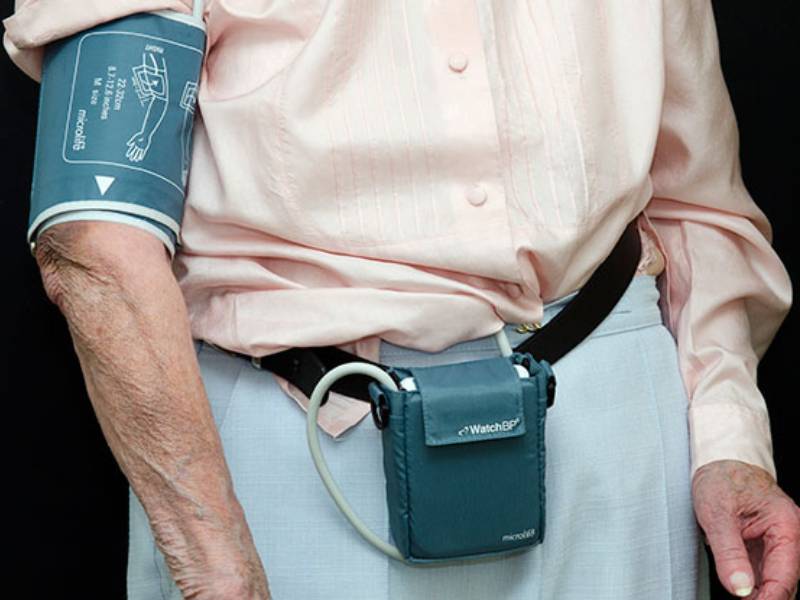
Ambulatory Blood Pressure Monitoring is a diagnostic test where you wear a small, portable blood pressure monitor for 24 hours. The device automatically inflates a blood pressure cuff on your arm at preset intervals (typically every 15-30 minutes during the day and every 30-60 minutes at night), recording your blood pressure while you sleep, work, exercise, and perform all your usual activities.
How It Works
- Small recording device – About the size of a smartphone, worn on a belt or shoulder strap
- Standard blood pressure cuff – Wrapped around your upper arm
- Connecting tube – Links the cuff to the recording device
- Internal memory – Stores all blood pressure readings for later analysis
Types of Blood Pressure Monitoring
Your cardiologist at Good Heart Clinic will recommend the most appropriate type based on your blood pressure readings, symptoms, cardiovascular risk factors, and treatment status.
Ambulatory Blood Pressure Monitoring (24-Hour ABPM)
Wearing an automated BP monitor for a full 24-hour period with readings every 15-60 minutes day and night.
Home Blood Pressure Monitoring (HBPM)
You measure your own blood pressure at home using a validated home BP device, typically twice daily for 7 days.
Nighttime Monitoring
It helps detect nocturnal hypertension
Symptoms
Persistent Headaches
Ongoing head pain that worsens with high blood pressure.
Shortness of Breath
Difficulty breathing even during light physical activities.
Chest Pain
Tightness or pressure in the chest area occasionally.
Dizziness / Lightheadedness
Feeling faint or unsteady while standing or moving.
Blurred Vision
Sudden or occasional visual disturbances or unclear sight.
Irregular Heartbeat
Heart feels like it’s skipping or beating very fast.
Nosebleeds
Unexpected nosebleeds occurring more often than usual.
Fatigue / Weakness
Feeling unusually tired even after adequate rest.
Benefits
Accurate Diagnosis
Assesses Nighttime Blood Pressure
Guides Precise Treatment
Predicts Cardiovascular Events
Preparations
Preparing for ambulatory blood pressure monitoring is straightforward. Follow these guidelines for the most accurate results:
Wear Comfortable Clothing
Arm Preparation
What NOT to Do
Procedure
Here’s what to expect during your 24-hour ambulatory blood pressure monitoring at Good Heart Clinic:
Step 1: Device Fitting (15-20 minutes)
- Blood pressure cuff placed on your upper arm (usually non-dominant arm)
- Cuff wrapped snugly but comfortably
- Connected to recording device via thin tube
- Device about the size of a smartphone, worn on a belt or shoulder strap
Step 2: The 24-Hour Monitoring Period
You’ll leave the clinic wearing:
- Blood pressure cuff on your upper arm
- Recording device on belt clip or shoulder strap
- Diary sheet to record activities
- Instructions and emergency contact information
What Happens Automatically:
Daytime Measurements (Every 15-30 minutes):
- Device beeps or vibrates before inflation (brief warning)
- Cuff automatically inflates, squeezing your arm
- Inflation lasts 30-60 seconds
- Pressure sensation as cuff measures
- Cuff deflates automatically
- Reading recorded in device memory
- You resume normal activity
Nighttime Measurements (Every 30-60 minutes):
- Same process but less frequent
- May briefly wake you – this is normal and expected
- Try to stay in bed and remain still during measurement
- Fall back asleep after cuff deflates
Step 3: Sleep with the Device
Nighttime Challenges:
- Measurements will wake you periodically – this is expected
- Sleep position may be awkward to avoid compressing cuff arm
- Try to sleep on opposite side from cuff
- Some people find sleep quality reduced – one night of data is worth it
Step 4: Returning the Device (Next Day)
24 Hours Later:
- Return to Good Heart Clinic at scheduled time
- Technician removes cuff and device
- You’ll hand in completed diary
- Brief discussion of how monitoring went
- Device data downloaded for analysis
Removal:
- Takes only 1-2 minutes
- Simple unwrapping of cuff
- No discomfort
- May have slight cuff marks on arm (fade quickly)
- Resume all normal activities immediately including showering
Step 5: Data Analysis and Results
What Happens Next:
- Cardiologist reviews all 60-80+ blood pressure readings
- Analyzes daytime vs. nighttime patterns
- Calculates averages, blood pressure load, variability
- Assesses dipping pattern
- Correlates readings with your diary entries
- Generates comprehensive report
Frequently Asked Question (FAQs)
ABPM is recommended for people with fluctuating BP levels, suspected masked hypertension, resistant hypertension, or those not responding well to regular blood pressure treatment.
The portable BP monitor automatically checks your blood pressure at regular intervals while you continue your routine activities, helping doctors understand your daily BP variations.
ABPM is not painful, though you may feel slight cuff pressure during readings. It is a comfortable and safe method for accurate hypertension diagnosis.
Yes, ABPM is the best method to detect nocturnal hypertension, helping doctors evaluate sleep-related BP changes and early risk of heart disease.
The cost of ABPM varies depending on the clinic, but it is generally affordable and provides high diagnostic value for long-term BP management.