Welcome to meidicross the leading medical facility for the health of you and your family.
Welcome to meidicross the leading medical facility for the health of you and your family.


Last updated: June 30, 2026
Q: How long is recovery after coronary angioplasty?
A: Most patients go home the same day or next morning after angioplasty. Light activity resumes within 2–3 days. Desk work within 1–2 weeks. Driving after 1 week (radial access). Full normal activity by week 4–6. Complete cardiac recovery — including stent stabilisation — takes approximately 3 months.
Q: What Indian foods are safe to eat after angioplasty?
A: Safe Indian foods after angioplasty: dal, sabzi cooked in minimal oil, roti (1–2), brown rice, oats, poha, idli, curd (low-fat), fruits (banana, papaya, apple), and fish. Avoid: poori, paratha, ghee in excess, pickle, papad, fried snacks, and full-fat dairy for the first month.
Q: Can I stop my blood thinner tablet after angioplasty?
A: Never stop without doctor’s approval. Dual antiplatelet therapy (aspirin + clopidogrel/ticagrelor) must continue for a minimum of 6–12 months after a drug-eluting stent. Stopping early — even once — dramatically increases the risk of stent thrombosis, which can cause a fatal heart attack.
Q: When should I go to hospital after angioplasty?
A: Go immediately if your patient develops: new chest pain or tightness, sudden breathlessness at rest, dizziness or fainting, swelling or bleeding at the wrist site, fever above 38°C, or cold/numb hand on the procedure side. Do not wait — call the cardiac emergency number directly.
Q: When can a patient walk after angioplasty?
A: Same day — within 2–4 hours of a radial (wrist) angioplasty. Short, slow walks around the ward or home are encouraged from day one. By week 2, a 15–20 minute walk daily is the target. By week 4–6, 30-minute brisk walks are typically safe with cardiologist clearance.
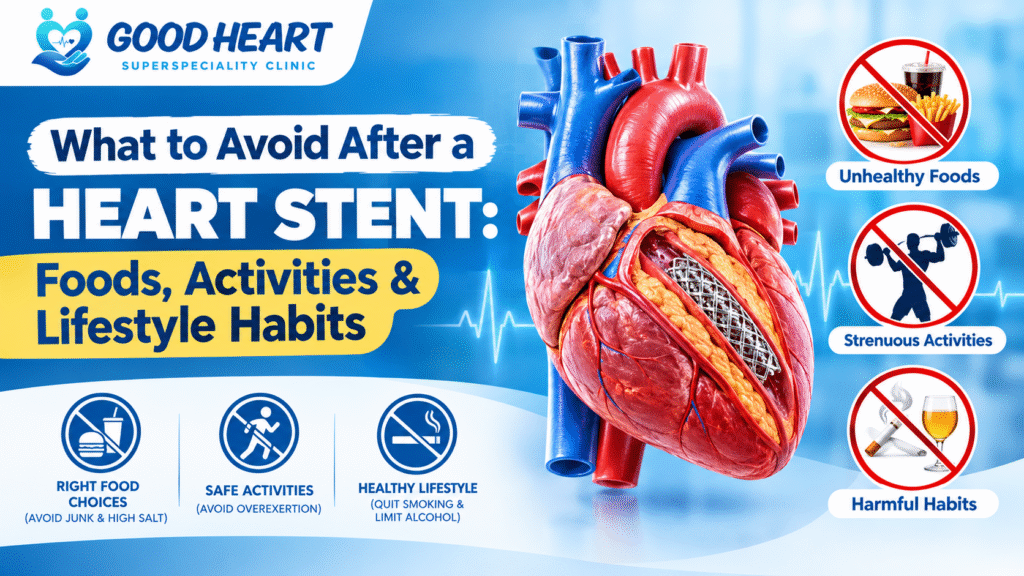
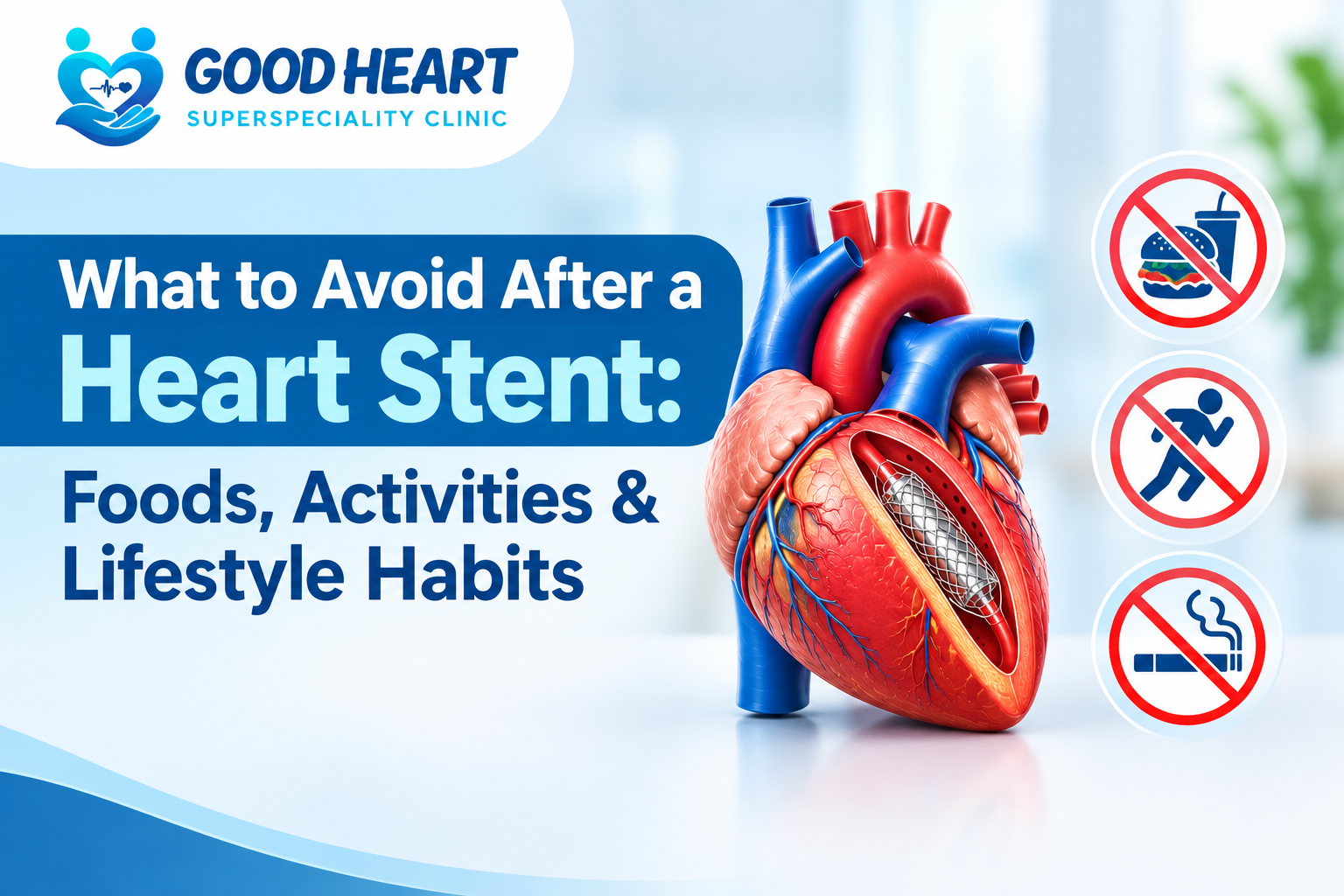
Getting a stent placed is a life-changing moment. The procedure itself takes less than an hour in most cases, but what you do in the weeks and months afterward decides how well your heart actually heals. Over the years of writing and reviewing patient-education content in cardiac care, one thing comes up again and again: patients focus so much on the angioplasty itself that they forget recovery is really a second, longer procedure, one that happens through daily choices.
This guide, brought to you by the cardiac care team at Good Heart Clinic, walks you through exactly what to avoid after a stent, including diet, physical activity, medication habits, and lifestyle factors, so you can recover with confidence and reduce the risk of complications like re-narrowing (restenosis) or clot formation.
A stent is a small mesh tube placed inside a blocked or narrowed coronary artery during angioplasty to restore normal blood flow. But placing the stent doesn’t “cure” heart disease; it treats one blockage. The underlying condition that caused the blockage (plaque buildup, high cholesterol, high blood pressure, diabetes, or lifestyle factors) is still present and needs ongoing management.
In the first few weeks, your artery lining is healing around the stent. This is why doctors divide recovery into phases:
Phase 1 (Week 1 to 2): Early recovery The wound at the catheter site is healing, and the body is adjusting to blood-thinning medication. Rest, light walking, and a very light, heart-friendly diet are the priority.
Phase 2 (Week 3 to 6): Building back activity Most patients can slowly resume light household work, short walks, and normal daily routines, but strenuous exertion and heavy meals are still restricted.
Phase 3 (Month 2 onward): Long-term maintenance This is where lifelong dietary and lifestyle habits take over. The stent has largely healed into place, but the real work of preventing future blockages (diet, exercise, medication adherence, stress management) continues indefinitely.
Understanding these phases matters because what you should avoid after angioplasty changes slightly as you move from Phase 1 to Phase 3.
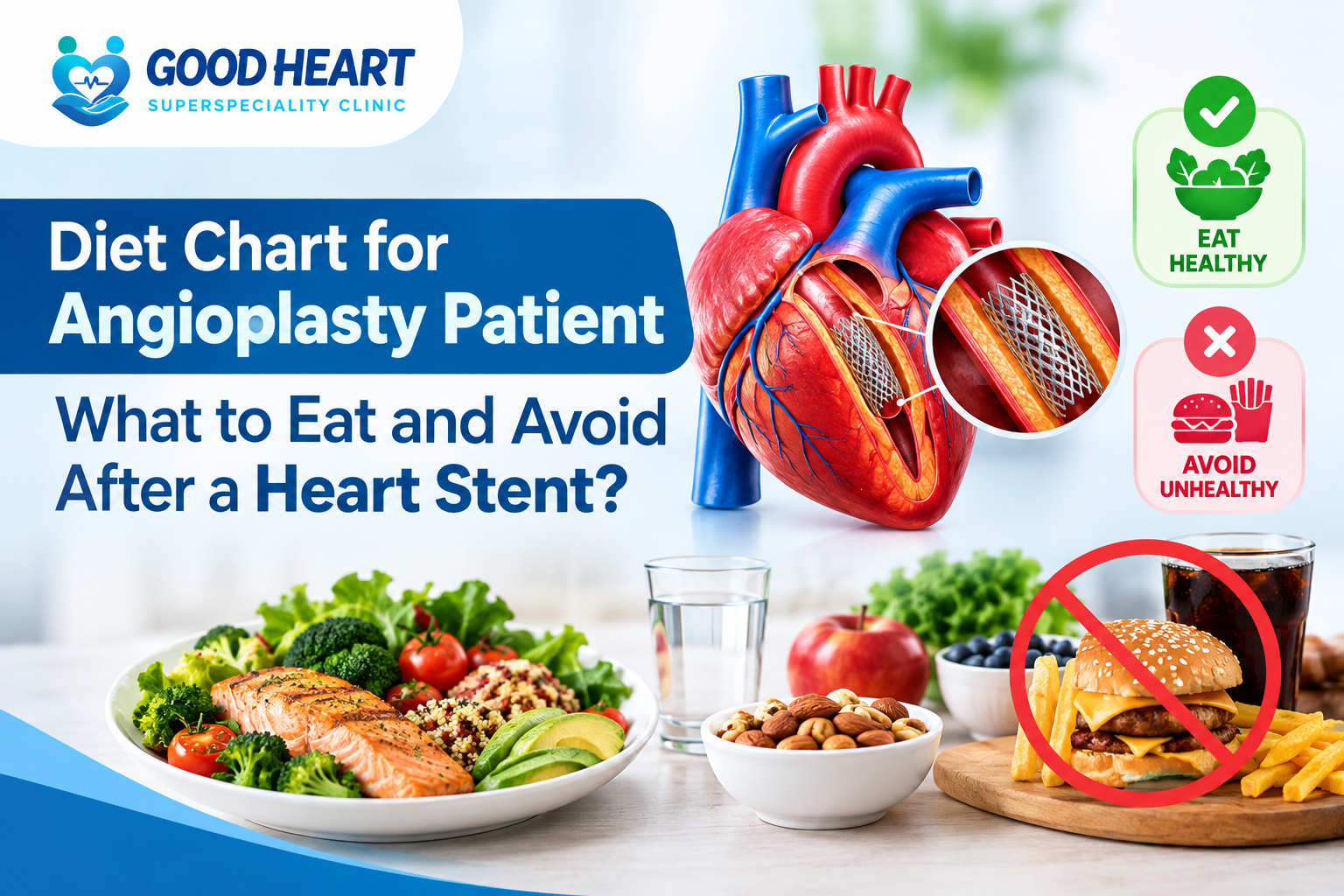
Diet after angioplasty is one of the most searched concerns among patients, and for good reason: what you eat directly affects cholesterol buildup, blood pressure, and clotting risk. Below is a practical foods to avoid after angioplasty list that most cardiologists recommend, especially relevant for an Indian diet chart after angioplasty where fried snacks and rich curries are part of daily life.
Avoid completely in the first few weeks:
Recovery Period | Foods to Avoid Completely | Reason |
Day 1 to 3 | All fried food, red meat, full-cream dairy, bakery items, pickles, sugary drinks | Body is adjusting to blood thinners; digestion should stay light |
Day 4 to 7 | Same as above, plus limit tea and coffee to one cup | Wound healing is active; sodium and stimulant intake should stay minimal |
Week 2 | Fried food, processed snacks, red meat, full-fat dairy in large amounts | Artery lining is still healing around the stent |
Week 3 to 4 | Fried food and packaged snacks remain restricted; other items can be reintroduced in small amounts | Body has adjusted to medication; transition toward portion control begins |
Week 5 onward | Fried food and trans fats stay off-limits long-term; other items are managed with portion control | Long-term heart health depends on consistently low saturated fat and sodium intake |
Real-world example: A 58-year-old patient recovering from angioplasty was used to a daily breakfast of poha loaded with extra oil and namkeen sev. Switching to a lightly tempered poha with vegetables and skipping the sev topping reduced his daily sodium and fat intake significantly, a small swap that made a real difference over months.
Not everything needs to be eliminated; some foods simply need portion control as part of a diet chart for angioplasty patients.
A good rule of thumb for a post-angioplasty diet chart is the “half-plate rule”: fill half your plate with vegetables, a quarter with whole grains, and a quarter with lean protein like dal, fish, or skinless chicken.
Food Item | Weeks 1 to 2 | Weeks 3 to 6 | Month 2 Onward |
Refined carbs (white rice, maida) | Avoid, choose whole grains | Small portions, 2 to 3 times a week | Occasional, in moderation |
Egg yolks | Avoid or limit to egg whites | 1 to 2 yolks a week | 2 to 3 yolks a week, doctor permitting |
Tea or coffee | 1 cup a day | 1 to 2 cups a day | 2 to 3 cups a day |
Ghee or cooking oil | Minimal, under 1 teaspoon per meal | 1 teaspoon per meal | Cold-pressed oil, controlled daily quantity |
Bananas and high-potassium fruits | As advised by doctor | Normal serving, if approved | Normal serving, if approved |
Physical activity is essential for heart recovery, but the wrong kind of activity at the wrong time can cause complications, especially at the catheter insertion site (usually the wrist or groin).
In the first 1 to 2 weeks, avoid:
Recovery Period | Activities to Avoid | Activities That Are Usually Safe |
Day 1 to 2 | Driving, lifting, bathing at the wound site, stairs | Slow indoor walking for a few minutes, resting |
Day 3 to 7 | Driving, heavy lifting, swimming, gym, running | Short flat-surface walks, light seated activity |
Week 2 | Driving (if femoral approach), intense exercise, heavy chores | Walking 10 to 15 minutes, light desk work from home |
Week 3 to 4 | Gym workouts, running, competitive sport, heavy lifting | Walking 15 to 20 minutes, light household chores |
Week 5 to 6 | High-intensity training, contact sport | Walking up to 30 minutes, gentle stretching, driving if cleared |
Week 7 to 8 onward | Unsupervised strenuous exercise without medical clearance | Brisk walking, light jogging, structured exercise once approved |
By week 3 to 6, most patients can gradually introduce:
Strenuous exercise, weightlifting, and competitive sports should generally wait until your cardiologist confirms your heart has stabilized, usually around 6 to 8 weeks, sometimes longer depending on your overall condition.
This section deserves its own space because it is non-negotiable in almost every post-angioplasty care plan.
Smoking: Nicotine constricts blood vessels and significantly raises the risk of stent blockage and future heart attacks. There is no “safe” amount of smoking after a stent; complete cessation is the standard medical recommendation. If quitting feels difficult, nicotine replacement therapy and counseling support, discussed with your doctor, can help.
Alcohol: Excess alcohol interacts poorly with blood-thinning medications like aspirin and clopidogrel, increasing bleeding risk. It can also raise blood pressure and triglyceride levels. Most cardiologists advise avoiding alcohol entirely in the first few months and, afterward, keeping intake minimal and only with your doctor’s clearance.
Medication after angioplasty is not optional or flexible; it is one of the most critical parts of recovery. Common mistakes include:
If you ever miss a dose, don’t double up the next one. Contact your doctor’s office for guidance instead of guessing.
Emotional and physical stress place real strain on a recovering heart, yet this part of care is often overlooked.
Avoid:
Simple daily habits, such as a short walk, breathing exercises, or even 10 minutes of quiet time, can meaningfully support recovery alongside diet and medication.
This is one of the most common questions patients ask, and the honest answer is: it depends on your specific case, the type of stent, and your overall heart function. Two patients who had the same procedure on the same day can still recover at different speeds, depending on age, other health conditions like diabetes, and how well they stick to their medication and diet plan.
That said, here is a general timeline many patients follow, always confirmed with their own cardiologist.
Time Period | Wound Site Care | Physical Activity | Work and Driving | Diet Focus |
Days 1 to 3 | Keep dressing dry and clean; watch for swelling or bleeding | Rest at home; short walks indoors only | No driving; avoid stairs where possible | Light, low-oil, low-salt meals |
Week 1 to 2 | Site mostly healed; avoid scrubbing or soaking | Slow walking on flat ground, 5 to 10 minutes, a few times a day | Desk-based work from home only, if essential | Fruits, vegetables, dal, roti; avoid fried food completely |
Week 3 to 4 | Fully healed in most cases | Walking sessions of 15 to 20 minutes; light household chores | Short local travel as a passenger; return to light desk work | Introduce whole grains; continue avoiding processed snacks |
Week 5 to 6 | No restrictions unless advised otherwise | Walking up to 30 minutes; gentle stretching; stairs at a normal pace | Driving may resume if cleared by the cardiologist; moderate exercise if approved | Standard heart-healthy diet with portion control |
Week 7 to 8 | No restrictions | Brisk walking, light jogging, or cycling if approved; stress test often done around this stage | Return to regular work routine, including moderate physical roles | Long-term diet chart maintained consistently |
Week 9 to 12 | No restrictions | Gradual return to structured exercise, gym, or sport, based on stress test results | Full work resumption, including travel, if heart function is stable | Diet becomes a lifelong habit, not a temporary phase |
Keep in mind this chart reflects a typical, uncomplicated recovery. Patients with reduced heart function, multiple stents, diabetes, or other cardiac conditions may be advised a slower or a customised timeline by their cardiologist.
A few specific milestones patients often ask about:
Your cardiologist may adjust this timeline earlier or later based on your angiography results, ejection fraction (a measure of how well your heart pumps), and how your body responds during follow-up visits.
Recovering well after a stent isn’t about one perfect day. It’s about consistent, small choices across diet, activity, medication, and stress management over weeks and months. Avoiding fried and processed foods, easing back into activity in phases, staying strictly consistent with medication, and cutting out smoking and alcohol together create the foundation for long-term heart health. Recovery timelines vary from person to person, which is why personalized guidance matters more than generic advice.
If you’ve recently had a stent placed or are supporting a family member through recovery, the safest next step is a conversation with a cardiologist who knows your specific case. At Good Heart Clinic, our cardiac care team can review your reports, build a personalized diet chart, and guide you through each phase of recovery with a plan built around you.
In the early recovery phase, avoid deep-fried foods, red and organ meats, full-fat dairy, sugary drinks, and high-sodium packaged foods. As recovery progresses, the focus shifts to long-term portion control rather than complete elimination for most foods.
Light walking can usually begin within days, but strenuous exercise, gym workouts, and heavy lifting are generally avoided for at least 6 to 8 weeks, or until your cardiologist clears you based on your recovery progress.
Moderate caffeine intake, around two to three cups a day, is generally considered acceptable for most patients, but it’s worth discussing your personal limit with your cardiologist, especially if you have irregular heartbeats.
Small, controlled quantities of cold-pressed oils are usually fine. The main concern is overall quantity and the type of fat, not complete avoidance. Deep-fried and reheated oils should be avoided
Focus on wound care, avoiding heavy lifting, taking prescribed antiplatelet medication without skipping doses, eating a light low-sodium diet, avoiding smoking and alcohol completely, and attending all follow-up appointments.
Not fundamentally, but it accounts for common staples like dal, roti, rice, and regional cooking styles. The core principles stay the same: low oil, low sodium, and controlled portions, adapted to include everyday foods like poha, khichdi, and steamed idli instead of Western low-fat alternatives.
Desk-based or low-stress work can often resume within 1 to 2 weeks if recovery is going smoothly, but physically demanding jobs usually need 6 to 8 weeks. Your cardiologist will confirm this based on your stress test results and overall recovery.
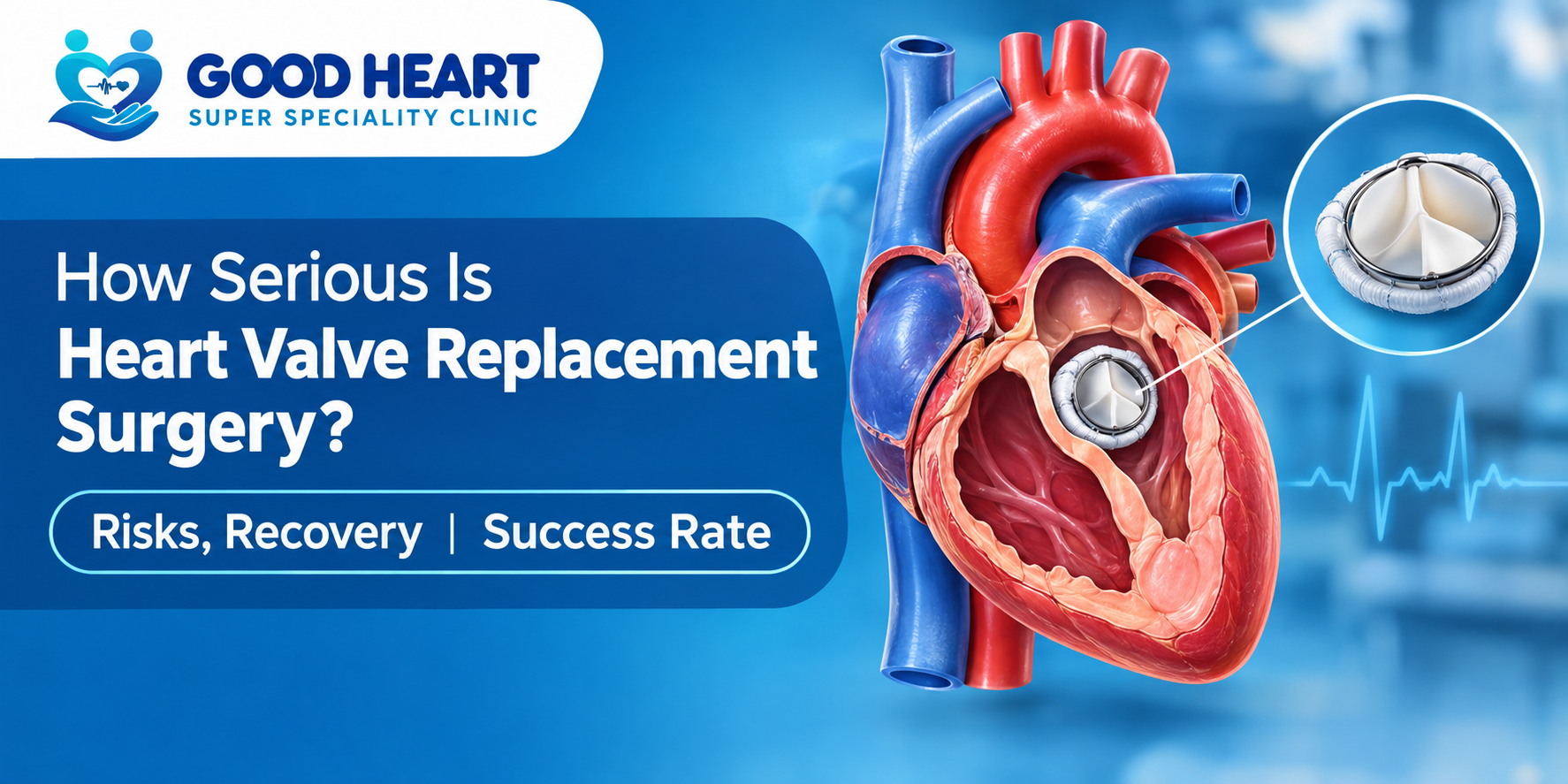
Heart valve replacement surgery is major surgery, and it deserves to be taken seriously — but the data is genuinely reassuring. Modern techniques, experienced surgical teams, and decades of refinement have made this one of the safer major cardiac procedures available today, with high success rates and strong long-term survival. The most important thing you can do is choose an experienced valve center, understand your personal risk factors, and go into surgery with realistic, well-informed expectations.
Book your post-angioplasty follow-up consultation today. Your stent is doing its job. Make sure everything around it is too.
Morning OPD — Cardiac OPD C7, Ground Floor, Building 3, Ruby Hall Clinic, Pune 411001 Evening OPD — 303A, Choice Apartments, Opp. Vohuman Cafe, Dhole Patil Road, Pune 411001 Appointments: 9822055445 / 8208950831 Cardiac Emergency: 9697020666 / 7722031119 goodheartclinic.com
OPD Timings: Monday to Saturday | Morning: 10 AM – 4 PM | Evening: 4 PM – 8 PM
We believe that every patient deserves absolute confidence in their care plan.
303, A, Choice Apartments Opp Vohuman Cafe , Dhole Patil Road , Pune
Support mail: drharshalingle@gmail.com
Opening Hours: Mon -Sat: 04.00 PM to 08.00 PM