

Coronary Angiography
Overview
Coronary Angiography is one of the most important and widely used diagnostic procedures in modern cardiology. It helps cardiologists see the exact condition of the coronary arteries—the vessels that supply blood to your heart. Through this test, doctors can identify blockages, narrowing, or abnormalities in real-time and decide the most suitable treatment such as angioplasty, stenting, medications, or bypass surgery.
At Good Heart Clinic, Coronary Angiography is performed using advanced imaging systems, experienced interventional cardiologists, and strict safety standards to ensure precise diagnosis and minimal discomfort. Whether you’re experiencing symptoms of heart disease or have risk factors, angiography plays a crucial role in protecting your heart health.
Coronary Angiography in Pune | Heart Angiogram
If you are looking for advanced coronary angiography in Pune, Good Heart Clinic provides expert cardiac evaluation and guidance for accurate diagnosis of blocked coronary arteries.
A heart angiography in Pune helps detect narrowing or blockages in coronary arteries that may cause chest pain, heart attack, or other serious cardiac conditions.
What is a Coronary Angiography?
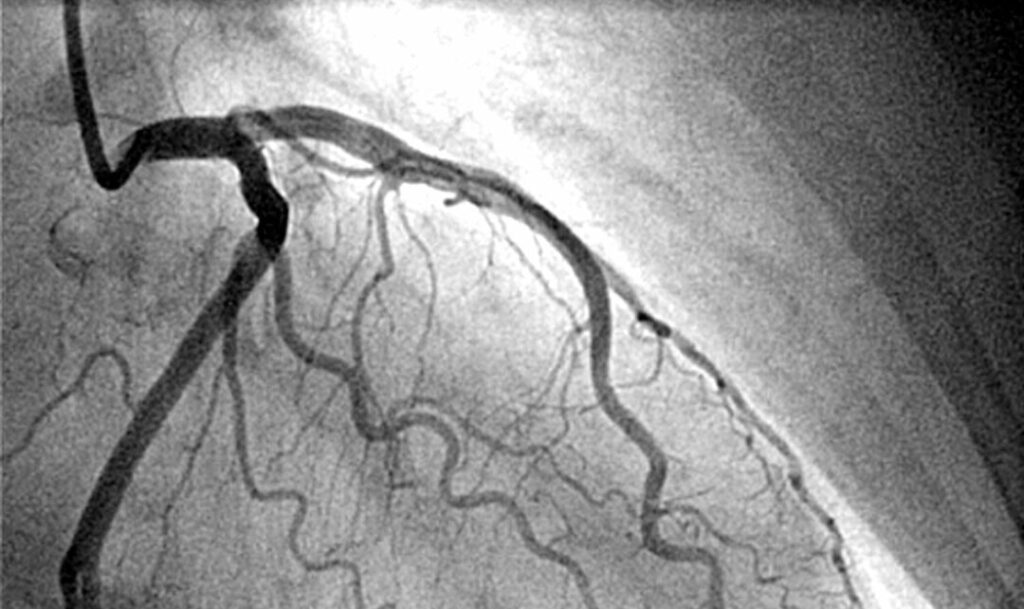
Coronary Angiography (or Coronary Angiogram) is an imaging procedure that uses a special dye and X-ray technology to visualize the coronary arteries. By injecting a contrast dye into the heart’s arteries, doctors can see:
- How well blood flows through the arteries
- Presence of blockages or narrowing (stenosis)
- Exact percentage of blockage
- Condition of the heart chambers and valves
- Abnormalities in blood vessels
This procedure helps in diagnosing conditions like coronary artery disease (CAD), heart attack, chest pain (angina), congenital heart issues, and other structural problems. It is considered the gold standard for detecting blockages
Time Taken for the Procedure
Coronary angiography is relatively quick compared to many medical procedures.
The procedure
5-10 minutes, though it may take longer if your anatomy is complex or if additional interventions are needed.
Recovery and observation
2-6 hours after the procedure, depending on which access site was used (wrist or groin) and your overall condition.
Total hospital time
Most patients spend 4-8 hours at the hospital for the entire process.
Symptoms
Chest Discomfort
This may feel like pressure, squeezing, fullness, or pain in the center of your chest.
Shortness of Breath
Difficulty breathing, especially during physical activity or when lying flat, can indicate your heart isn't pumping efficiently.
Unexplained fatigue
Feeling unusually tired, particularly if simple activities leave you exhausted,
Heart attack symptoms
If you've experienced or are experiencing severe chest pain, pain radiating to your arm or jaw, sweating, nausea, or shortness of breath
Lightheadedness
If you frequently feel unsteady or close to fainting.
Unexplained Tiredness
If low energy affects your daily activities despite resting.
Heavy Heartbeats
If your heart suddenly races or beats forcefully without reason.
Stress-Triggered Discomfort
If anxiety or emotional strain brings on chest or heart-related sensations.
Benefits
Highly accurate diagnosis
Helps Decide the Right Treatment
Prevents Future Heart Attacks
Immediate Treatment in Emergency Cases
Preparations
Proper preparation helps ensure your procedure goes smoothly and safely. Your healthcare team will provide specific instructions, but here are general guidelines to expect.
Before the Day of Your Procedure:
On the Day of Your Procedure:
What Does the Procedure Involve?
Understanding what happens during coronary angiography can help ease any anxiety you might feel. Here’s a step-by-step overview of what to expect.
Arrival and Preparation:
You’ll be taken to the cardiac catheterization lab, often called the “cath lab.” The room contains imaging equipment and monitors. The staff will help you lie down on a special X-ray table and connect you to monitors that track your heart rate, blood pressure, and oxygen levels throughout the procedure.
Anesthesia and Comfort:
You’ll remain awake during the procedure, but you’ll receive medication through an IV to help you relax. Your doctor will numb the area where the catheter will be inserted—typically your wrist or groin—with a local anesthetic. You’ll feel a small pinch or sting when the numbing medicine is injected, but you shouldn’t feel pain during the procedure itself.
Catheter Insertion:
Your doctor will make a small puncture in your artery and insert a thin plastic sheath. Through this sheath, a catheter (a thin, flexible tube about the width of a strand of spaghetti) is carefully threaded through your blood vessels. Using X-ray guidance, your doctor navigates the catheter to your heart’s arteries. You won’t feel the catheter moving through your blood vessels.
Contrast Dye Injection:
Once the catheter is properly positioned, your doctor injects contrast dye through it into your coronary arteries. You might experience a warm, flushing sensation throughout your body when the dye is injected—this is completely normal and lasts only a few seconds. The dye makes your arteries visible on X-ray images.
Image Capture:
The X-ray camera rotates around you, taking pictures from multiple angles as the dye flows through your arteries. Your doctor may ask you to hold your breath briefly or take deep breaths at certain points. You’ll see the images on monitors in the room, and your doctor may explain what they’re seeing.
Completion:
After capturing all necessary images, the catheter is removed. Pressure is applied to the insertion site to prevent bleeding. If the wrist was used, a special band or device may be placed to maintain pressure. If the groin was used, manual pressure or a closing device may be applied.
What Follows the Procedure?
After your coronary angiography, proper recovery and follow-up care are essential. Here’s what you can expect in the hours, days, and weeks following your procedure.
First Week Recovery:
- Avoid heavy lifting, pushing, or pulling for 3-7 days
- Don’t participate in strenuous exercise or sports
- You can shower after 24-48 hours, but avoid baths or swimming
- Return to light activities gradually as advised by your doctor
- Most people return to work within 2-7 days, depending on their job
Warning Signs to Watch For:
Contact your doctor immediately if you experience:
- Bleeding from the insertion site that doesn’t stop with gentle pressure
- A growing lump or significant swelling at the site
- Pain, numbness, or color changes in the arm or leg
- Chest pain or shortness of breath
- Fever over 100.4°F (38°C)
- Dizziness or fainting
Frequently Asked Question (FAQs)
No. The angiography procedure is not painful. Only a small amount of local anesthesia is used at the wrist or groin, so you may feel slight pressure but no discomfort. Most patients describe it as a quick and comfortable heart test.
The actual angiogram test takes around 20–30 minutes, while the total hospital time—including preparation and monitoring—may take 4–6 hours. If the test is done through the wrist, recovery is even faster.
Doctors suggest angiography when you have warning signs of heart blockage such as chest pain, breathlessness, fatigue, dizziness, or abnormal stress test results. Patients with diabetes, high BP, or high cholesterol may also need this test earlier for accurate heart disease detection.
Yes. It is a very safe and commonly performed cardiac test. Complications are extremely rare, especially when done by an experienced cardiologist. Your medical team monitors you throughout the procedure to ensure complete safety.
Yes. Coronary angiography is considered the gold standard for detecting coronary artery blockages. It shows the exact location, size, and severity of narrowing in the arteries, which helps in planning treatment like stenting or bypass surgery.