

Treadmill (TMT) Test
Test your heart’s strength with a safe, trusted TMT
Treadmill (TMT) / Stress Test
Overview
A Treadmill Test, also known as an Exercise Stress Test or TMT (Treadmill Test), is a safe, non-invasive diagnostic procedure that evaluates how well your heart performs under physical stress. This simple yet powerful test helps your cardiologist detect heart problems that may not be apparent when your body is at rest, providing crucial insights into your cardiovascular health and guiding the best treatment plan for you.
At Good Heart Clinic, we perform stress tests in a comfortable, supervised environment with state-of-the-art equipment and experienced cardiac specialists monitoring you throughout the entire procedure. Whether you’re experiencing worrying symptoms or simply want to assess your heart health proactively, our team ensures you feel safe, informed, and confident every step of the way.
What is a Treadmill Test (TMT)?
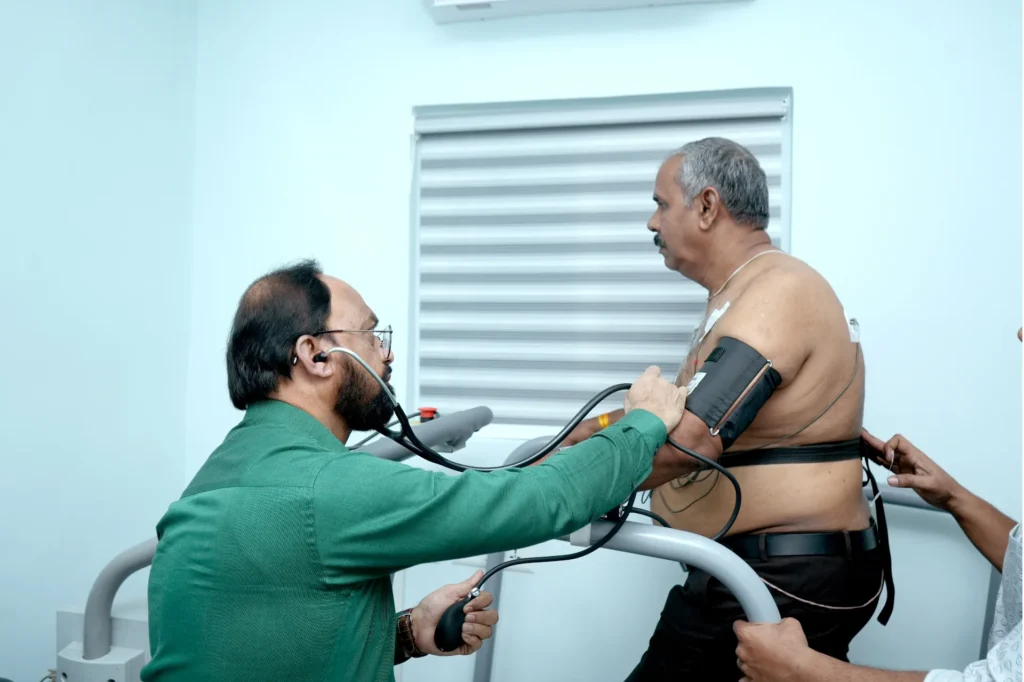
A Treadmill Test is a diagnostic procedure where you walk on a treadmill while your heart’s electrical activity, heart rate, blood pressure, and breathing are continuously monitored. The treadmill gradually increases in speed and incline, making your heart work progressively harder, similar to climbing a hill or walking up stairs.
Many heart problems—particularly coronary artery disease—don’t show symptoms when you’re resting. However, when your heart has to work harder during physical activity, hidden issues like blocked arteries or irregular rhythms often become detectable. This is why stress testing is one of the most valuable tools cardiologists have for diagnosing heart conditions early, when they’re most treatable.
Treadmill tests have been used safely for decades and are considered the gold standard for assessing exercise-induced cardiac symptoms. The test is performed under close medical supervision, with emergency equipment readily available, making complications extremely rare.
Treadmill Test in Pune
If you are looking for a reliable treadmill test in Pune, Good Heart Clinic offers advanced TMT and cardiac stress testing to evaluate how your heart performs during physical activity.
A TMT test in Pune helps detect blocked arteries, assess chest pain, and identify early signs of coronary artery disease before serious complications occur.
Types of TMT/Stress Test
While the standard treadmill test is most common, Good Heart Clinic offers several types of stress tests tailored to your specific needs and physical abilities:
Exercise Stress Test (Treadmill Test)
You walk on a treadmill that gradually increases in speed and incline while your heart is monitored via ECG, and your blood pressure is checked regularly.
Stress Echocardiogram
Combines a standard treadmill test with ultrasound imaging (echocardiography) of your heart performed before and immediately after exercise.
Nuclear Stress Test (Thallium / SPECT Test)
A small amount of radioactive tracer is injected into your bloodstream before and after the treadmill test. Special cameras take images showing blood flow to your heart muscle.
Symptoms
Chest Discomfort
If you feel tightness or pressure in your chest during activity.
Shortness of Breath
If normal walking or mild exercise leaves you breathless.
High Blood Pressure
If your BP fluctuates or remains higher than usual.
Irregular Heartbeats
If you notice skipped beats, fluttering, or unusual heart rhythm.
Lightheadedness
If you frequently feel unsteady or close to fainting.
Unexplained Tiredness
If low energy affects your daily activities despite resting.
Heavy Heartbeats
If your heart suddenly races or beats forcefully without reason.
Stress-Triggered Discomfort
If anxiety or emotional strain brings on chest or heart-related sensations.
Benefits
Early Detection of Heart Disease
Accurate Diagnosis
Personalized Treatment Planning
Safe Exercise Guidelines
Preparations
Proper preparation helps ensure your stress test provides the most accurate results and is as comfortable as possible. Here’s what you need to know before your appointment:
General Pre-Test Instructions
Wear Comfortable Clothing
Eating and Drinking Guidelines
Special Preparation for Specific Stress Test Types
For Nuclear Stress Tests:
- Additional restrictions may apply (longer fasting period, avoiding certain foods)
- You’ll receive specific instructions about the radioactive tracer injection
- The test takes significantly longer (3-4 hours), so plan accordingly
For Stress Echocardiograms:
- Similar preparation to standard stress test
- You’ll have ultrasound imaging before and after exercise
- Wear a top that can be easily removed for imaging
For Pharmacological (Chemical) Stress Tests:
- Stricter caffeine restrictions (24-48 hours before)
- No bronchodilator inhalers for several hours before (if you have asthma, discuss alternatives)
- Similar fasting requirements
What NOT to Do
Procedure
Step 1: Preparation (10-15 minutes)
- Check-in: Our staff will verify your information and review your medical history
- Vital Signs: We’ll measure your resting blood pressure, heart rate, and oxygen levels
- Consent: You’ll sign a consent form after we explain the procedure
- Questions: This is your opportunity to ask any last-minute questions
Step 2: Electrode Placement (5-10 minutes)
Preparing for Monitoring:
- Your chest will be cleaned with alcohol wipes
- Small areas of hair may be trimmed if necessary for electrode adhesion
- 10-12 small adhesive electrodes (sticky patches) will be placed on your chest to monitor your heart’s electrical activity
- A blood pressure cuff will be placed on your arm
- A baseline ECG will be recorded while you’re at rest
Step 3: The Exercise Test (8-12 minutes)
How It Works:
The treadmill starts at a very slow, easy pace—like a gentle walk. Every 3 minutes, the speed increases and the incline gets steeper, making your heart work progressively harder.
Typical Progression (Bruce Protocol):
- Stage 1: Slow walk uphill (1.7 mph, 10% incline)
- Stage 2: Comfortable walk on steeper hill (2.5 mph, 12% incline)
- Stage 3: Brisk walk uphill (3.4 mph, 14% incline)
- Stage 4+: Progressively faster and steeper
Most people complete 3-5 stages depending on fitness level.
Continuous Monitoring:
While you exercise, our team monitors:
- Your ECG in real-time for any abnormal heart patterns
- Your blood pressure every 1-2 minutes
- Your heart rate response to exercise
- Your physical appearance and symptoms
- How you’re feeling at each stage
Step 4: Cool-Down and Recovery (5-10 minutes)
Immediate Post-Exercise:
- The treadmill slows to a gentle walking pace for 2-3 minutes (don’t sit down immediately!)
- This gradual cool-down prevents dizziness and allows safe recovery
- We continue monitoring your ECG, blood pressure, and heart rate
- After 3-5 minutes of walking, you’ll sit in a comfortable chair
- Monitoring continues for an additional 5-10 minutes as your vital signs return to normal
Frequently Asked Question (FAQs)
A TMT is highly effective in identifying coronary artery disease (CAD), stress-induced chest pain, and irregular heartbeats. While it is not a standalone diagnostic test, it provides crucial information that helps your doctor decide if you need further tests like 2D Echo, CT Angiography, or Coronary Angiogram.
A TMT usually takes 15–20 minutes, but the entire appointment may last around 45 minutes including preparation and monitoring. The time may vary depending on your heart rate response and fitness level.
Yes, a TMT is generally safe. It is performed under the supervision of a cardiologist and trained technicians. If you feel discomfort, chest pain, dizziness, or breathlessness, the test is stopped immediately.
Yes. A Stress Test helps identify early signs of reduced blood supply, which often indicates beginning stages of heart blockage. It is a key tool in preventive cardiology for people at risk of heart disease.
Those with risk factors like diabetes, hypertension, high cholesterol, obesity, smoking habits, or family history of heart disease should undergo a TMT based on their cardiologist’s recommendation—usually annually or every 1–2 years.